
Your First-Quarter Data Has Something to Tell You

By early November, every district has a quarter of discipline, restraint, isolation, and placement data. Counts tell you whether the number went up or down — not who is being removed, from where, or why. Four questions that show you what the counts hide.
Classroom Corner: Say What You Saw

A two-minute habit for the hardest month of the year. “Good job” is easy to say and easy to ignore. When you see a behavior you want more of, name it — behavior-specific praise is one of the most consistently supported teacher practices in the literature.
De-escalation Starts on Monday

The stretch between Halloween and winter break is when restraint and isolation incidents climb. Most de-escalation training focuses on the moment a student is already escalated — but the incidents that never happen are the ones prevented days earlier. Four practices for your building team this month.
School Is Not the Clinic: Changing Your Mindset to Change Your Practice
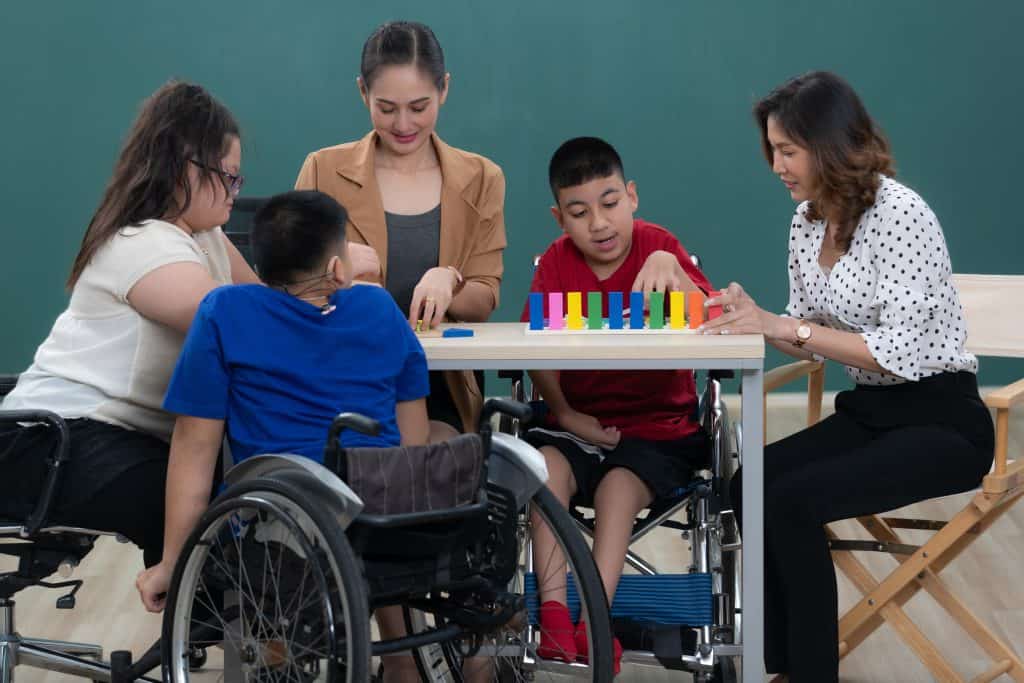
Most BCBAs learned the trade in a clinic. Schools run on different rules. DECS’s new live webinar series, School-Based Practice for BCBAs, opens November 19 with “School Is Not the Clinic” (1.0 Ethics + 1.0 Supervision BACB CEUs).
Evidence-Based Practices in Special Education: What “Evidence-Based” Actually Requires
In state and federal school improvement work, “evidence-based” means something quite precise, and getting the definition right is the difference between a funded intervention and a returned grant application, District L-CAP, or School Improvement Plan (SIP). First, the definition Under ESEA section 8101(21), an evidence-based intervention must meet one of four tiers of evidence. For […]
Your SpEd Manual Shouldn’t Be a Time Capsule

When was the last time your special education procedures manual was actually updated? If you’re like most directors, the honest answer is never – or rarely – even though you’ve been meaning to get to it for years. Updating a 200-page manual is the kind of work that never makes it to the top of […]