
Teacher-Delivered Behavior Interventions
Assessment is an essential part of teaching and learning and ‘state testing season’ is upon us. While assessments, especially state and local tests, are intended to give us information about what students know and can do, they can also feel high-pressure for students and overwhelming for educators.
Performance Under Pressure
When athletes are called on to perform in high-pressure situations, many describe having sharpened senses they can use to their advantage. They learn to quiet their minds, tune out the noise, and focus on the next play or shot. Students with test anxiety often experience the opposite reaction. Instead of feeling focused, their thoughts become crowded with worry, their bodies feel tense, and it becomes harder to access what they have learned.
Test anxiety is especially common for students with ADHD or learning disabilities. They may already feel anxious about school, and when it is time to take a test, that anxiety can heighten and activate a fight, flight, or freeze response that makes it harder to show what they know.
Teaching Students How to Keep Going When it Gets Tough
Just as athletes train for difficult moments in competition, we can teach students what to do when they start to feel anxious or stuck during a test. Simple strategies can help them prepare, reset and keep moving:
Have a plan: Educators can provide students with tools throughout the year like these Quick-Reference Cards and Thinking Checklists to help them develop strategies to approach test taking.
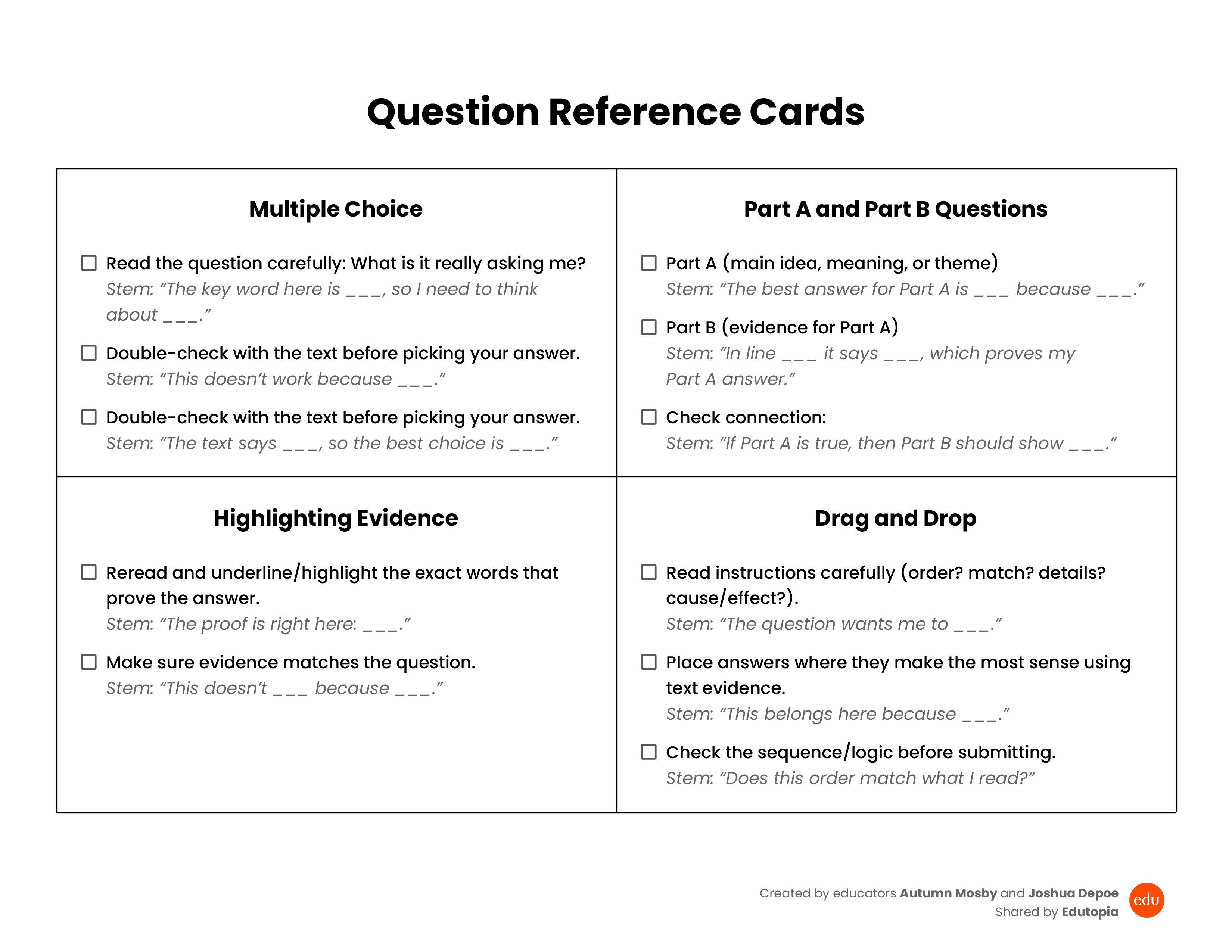
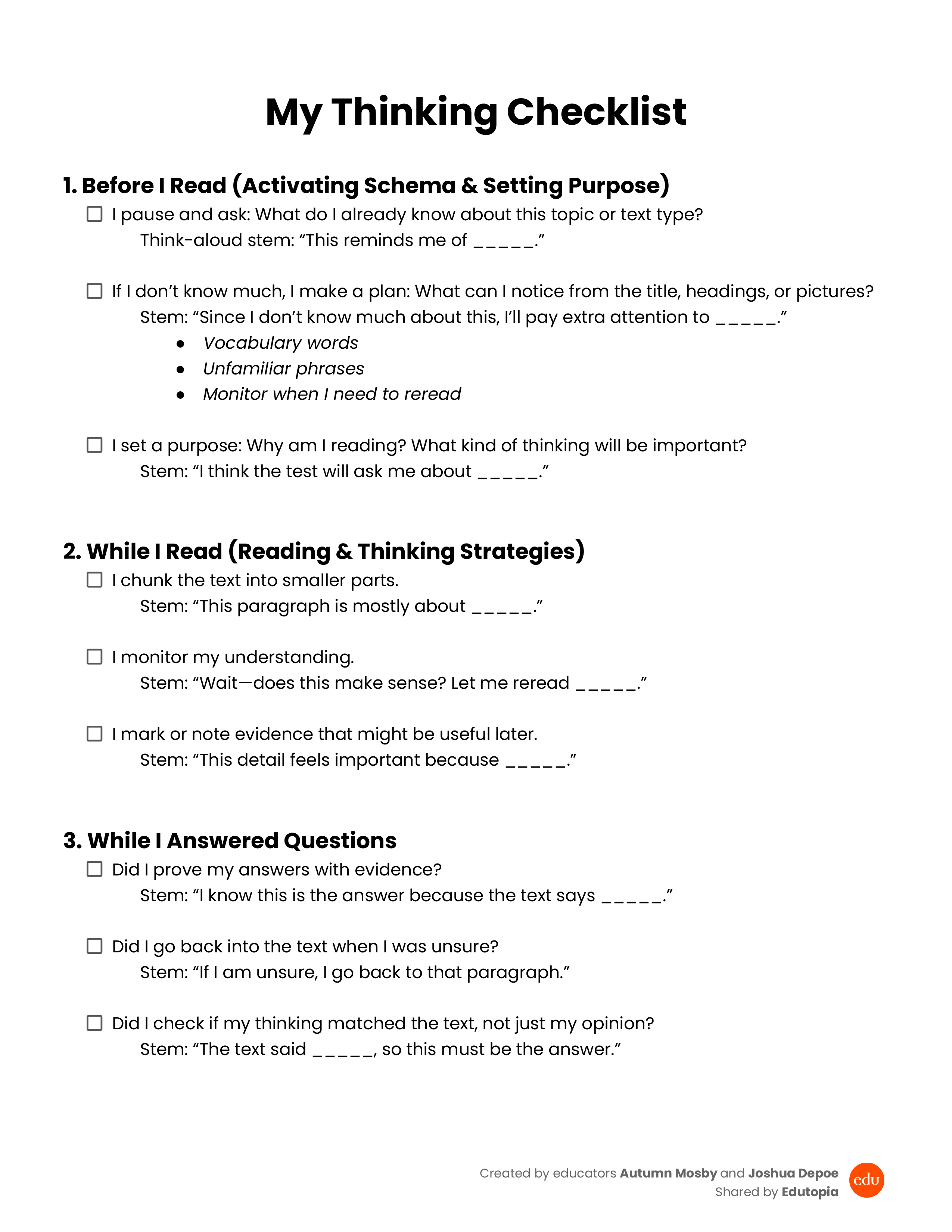
Visualize a successful outcome: Begin a testing session by asking students to imagine finishing the test feeling satisfied with their effort or seeing a score they can feel good about.


Practice mindful breathing: Model using slow, intentional breaths during testing sessions. This practice can signal the nervous system to calm down and make it easier to refocus on the task.
Take practice tests. Educators and students benefit from previewing available testing questions and accommodations. For students taking a test through the Smarter Balanced Assessment, Practice and Training Tests can help access items and learn about individual supports and accommodations.
Shift self-talk. Encouraging students to choose a simple, realistic affirmation such as “I am prepared,” or “This is just one test” can make a difference. In contrast, thoughts like “I am so stupid” or “I always fail tests” increase anxiety and make it harder for students to use the strategies they have learned. Naming these patterns and practicing more helpful language together can normalize the experience and give students tools they can use independently.
A little intentional planning, practice, and language around testing can go a long way in helping students manage anxiety and truly show what they know.
If your district is interested in related training or resources, please email us: Connect@dec.solutions.
This post was written by Dr. Lindsay Myatich, Senior Solutions Consultant. Learn more about Lindsay and our other team members on the DECS About Us webpage.